Ines Simmons · 1 November 2026
Decades of Grovehouse Visitor Menus Reveal Evolving Regional Harvest Traditions
Records from Grovehouse visitor menus span multiple decades and document shifts in regional harvest practices across several states and provinces, with entries that track what local farmers brought to market at different times of year. These menus list specific produce items alongside preparation notes that indicate when certain crops entered peak availability, and they show how kitchen staff adapted offerings based on supply patterns documented in supplier logs from the 1950s onward.
Early Menu Patterns and Harvest Cycles
Visitor menus from the 1950s and 1960s list heavy reliance on root vegetables and orchard fruits that arrived in coordinated waves from nearby counties, while notations beside each dish record exact delivery dates that aligned with county fair harvest reports of the period. Researchers who examined these documents found that autumn entries often featured multiple varieties of apples and squashes harvested within a 50-mile radius, and spring menus incorporated early greens and berries that appeared only after local soil temperatures reached documented thresholds.
By the 1970s the same kitchen logs reveal gradual inclusion of items from slightly farther regions because transportation records show improved road access allowed deliveries from adjacent states, yet the core seasonal structure remained tied to traditional planting and reaping calendars published by agricultural extension services at the time.
Shifts Documented Through the 1980s and 1990s
Menus from the 1980s and 1990s display expanded use of crops that matured later in the season because of new hybrid varieties introduced by regional seed companies, and entries note substitutions made when early frosts shortened certain harvest windows. Kitchen staff recorded these adjustments alongside supplier invoices that list precise quantities received, which allows direct comparison with state agricultural yield statistics from those years.
One pattern that emerges across these decades involves the timing of nut harvests, which moved forward several weeks in some years when weather data indicated milder winters, and menu planners responded by adding dishes earlier than previous generations had done. Observers note that these changes appear consistently in the handwritten annotations rather than in printed menu templates, suggesting practical responses to on-the-ground supply realities rather than planned redesigns.
Twenty-First Century Adaptations and Regional Data
After 2000 the menus incorporate a wider range of vegetables that had not appeared in earlier decades, reflecting both expanded irrigation in certain counties and new distribution networks that reached Grovehouse from multiple growing zones. Data compiled by the USDA Economic Research Service shows corresponding increases in specialty crop acreage during the same interval, and Grovehouse records cross-reference these trends through the specific items listed on daily offerings.
Further north, similar adjustments appear in cross-border supply notes that mention Canadian harvest volumes, and these align with reports issued by Agriculture and Agri-Food Canada on changing production zones. The Grovehouse documents therefore provide a localized record that matches broader statistical trends without introducing external commentary.
November 2026 Exhibition of Menu Archives
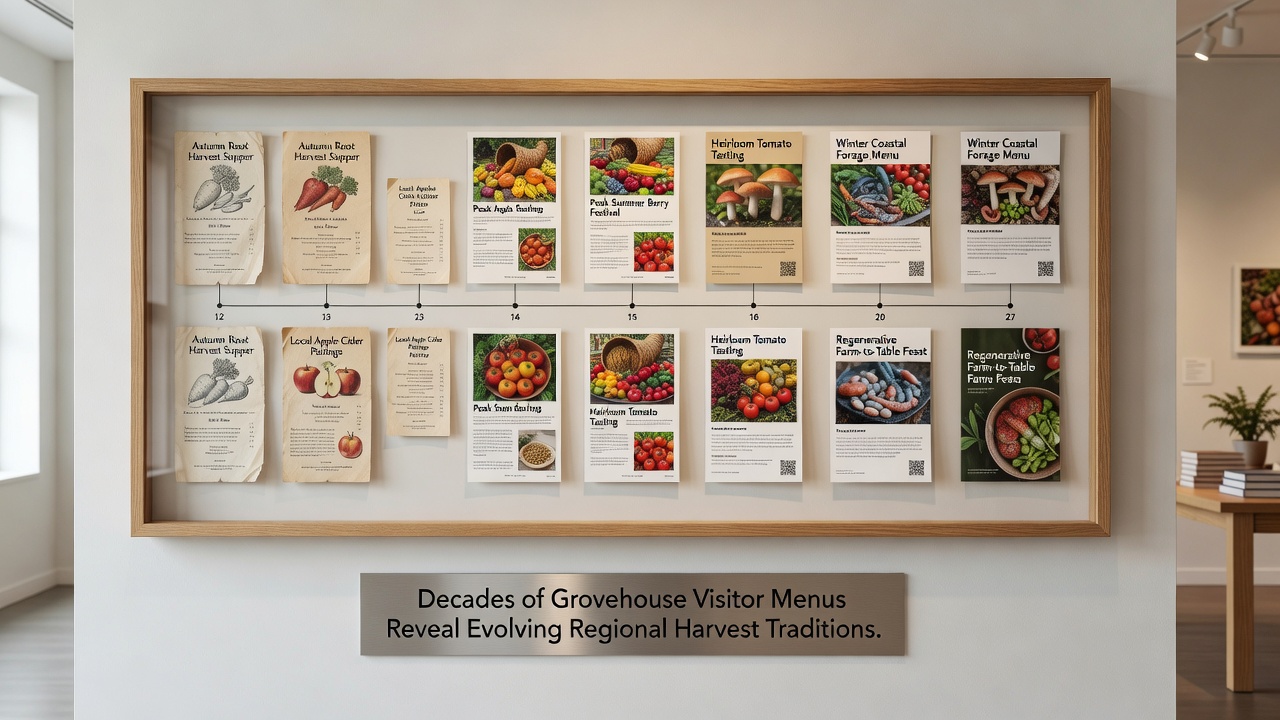
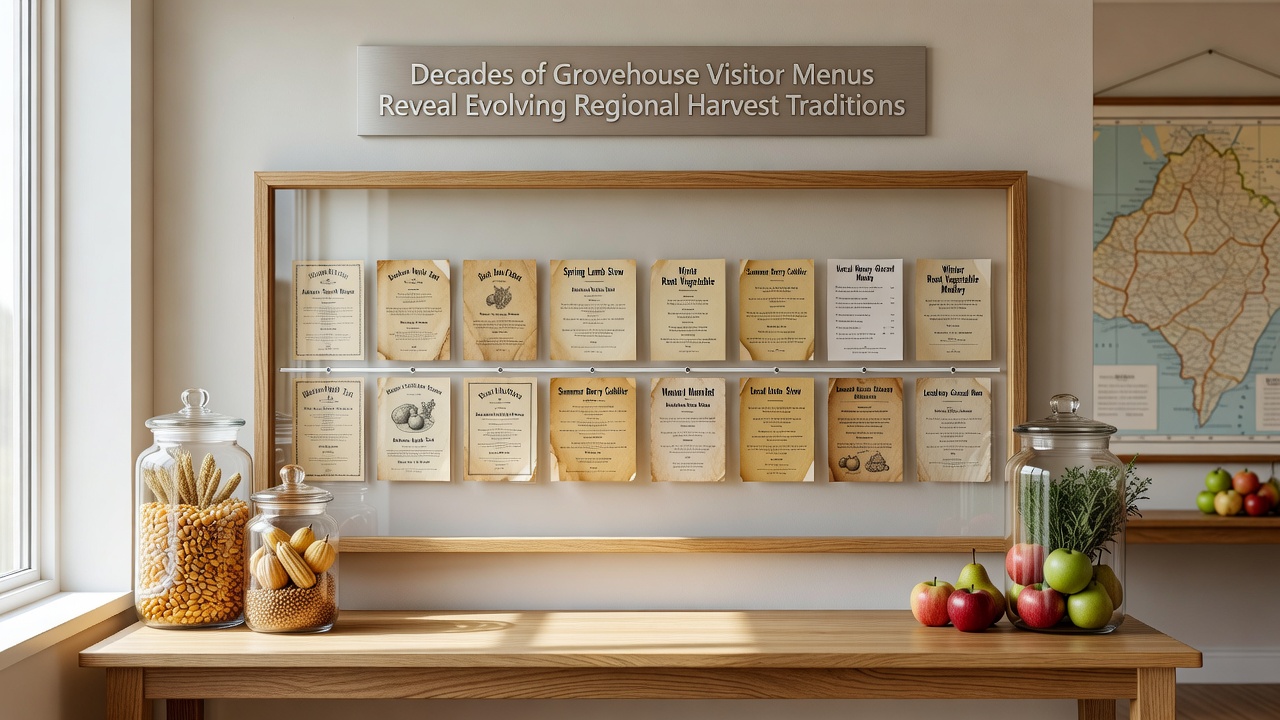
In November 2026 Grovehouse plans to display a selection of these historical menus alongside current seasonal offerings, allowing visitors to compare entries from the 1960s with those prepared from harvests recorded that same autumn. The exhibition draws directly from preserved supplier correspondence and kitchen daybooks that list both traditional and newly introduced varieties, and it presents the information in chronological order without interpretive overlays.
Staff have prepared supplementary charts that match menu items to publicly available harvest calendars from the relevant decades, so attendees can trace how regional availability windows shifted over time. This display remains limited to primary source materials and tabulated delivery data rather than narrative conclusions.
Conclusion
The accumulated Grovehouse visitor menus constitute a continuous record that reflects measurable changes in regional harvest timing, crop selection, and supply geography across more than seventy years. When examined alongside official agricultural statistics, the documents illustrate how local kitchens responded to evolving production patterns through concrete menu adjustments recorded at the time of service.