Ines Simmons · 6 September 2026
Diaries from Long-Term Residents Uncover Patterns in Woodland Flora Adaptations Over Decades
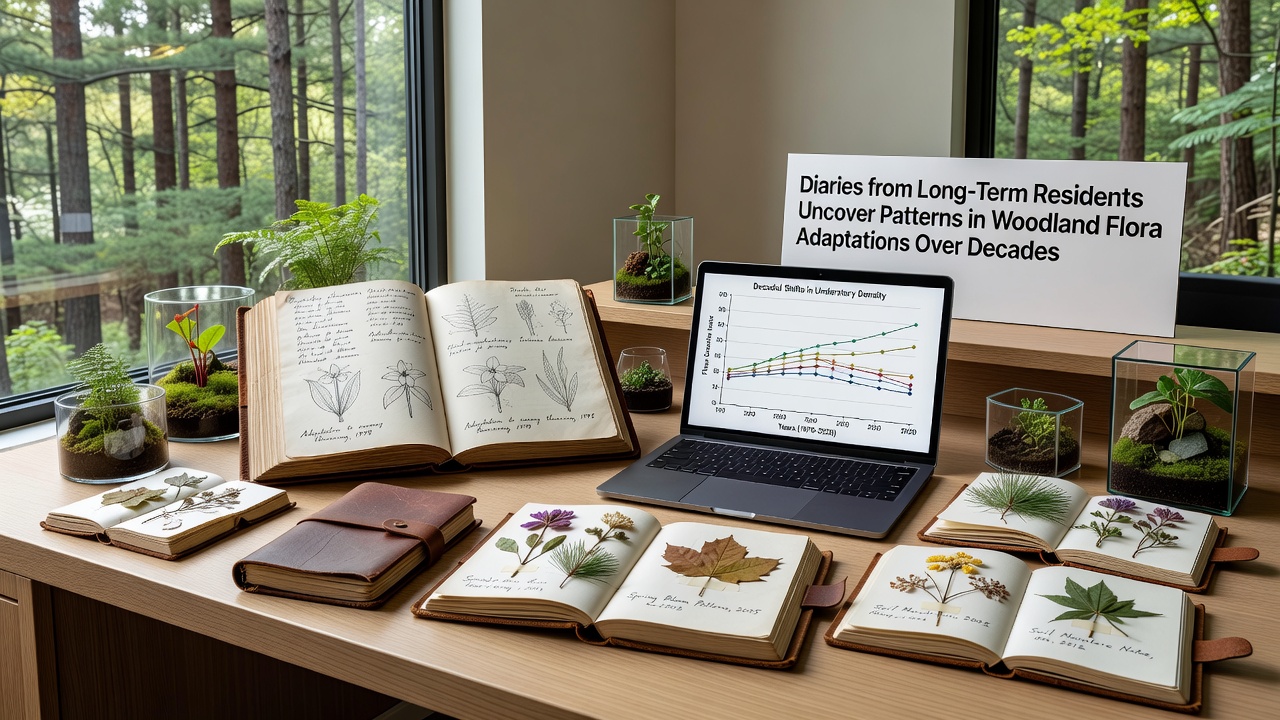
Long-term residents in various woodland regions have maintained personal diaries that span multiple decades, and researchers have begun systematically reviewing these records to identify consistent patterns in how local flora responds to environmental shifts. These documents often include detailed notes on flowering times, species presence, and growth conditions dating back to the mid-20th century, which provide a continuous timeline that complements shorter-term scientific surveys. Data from these diaries indicate that many native trees and understory plants have adjusted their seasonal cycles, with some species advancing bloom periods by two to four weeks compared to observations recorded in the 1960s and 1970s.
Documented Shifts in Flowering and Growth Cycles
Entries from diaries kept in temperate forest areas show that certain wildflowers now reach peak bloom earlier in spring, while others extend their growing seasons into later autumn months, and this aligns with temperature records maintained by regional meteorological stations. Observers note that species such as trillium and certain ferns appear more frequently in previously marginal zones, whereas others have declined in areas experiencing prolonged dry spells. A study conducted by the Canadian Forest Service links these diary observations to measurable changes in soil moisture and canopy cover across similar habitats, revealing that plants with deeper root systems have maintained stable populations even as surface conditions vary.
Additional patterns emerge when diary entries are cross-referenced with herbarium specimens collected over the same periods. Researchers have identified that several woodland shrubs have developed thicker leaf cuticles in response to increased ultraviolet exposure, a trait noted repeatedly in handwritten descriptions from the 1980s onward. These adaptations coincide with gradual increases in average summer temperatures documented across multiple monitoring sites.
Regional Comparisons and Species Responses
Diaries maintained in different geographic zones reveal both shared trends and localized variations. In northern woodlands, residents recorded the gradual northward movement of certain understory plants that previously thrived only in milder southern climates, while southern sites show increased presence of drought-tolerant grasses moving into former hardwood stands. According to reports from the USDA Forest Service, these movements correspond with shifts in precipitation distribution that have occurred steadily since the late 20th century.
One long-term diarist in the Pacific Northwest noted the appearance of new moss varieties on tree trunks during the 1990s that had not been present in earlier decades, and subsequent entries tracked their expansion alongside changes in humidity levels. Similar observations appear in records from Appalachian regions, where residents documented the decline of certain lichen species sensitive to air quality fluctuations. These accounts provide granular detail that broader satellite imagery often misses, because they capture microhabitat conditions at ground level over continuous timeframes.
Validation Through Scientific Cross-Referencing
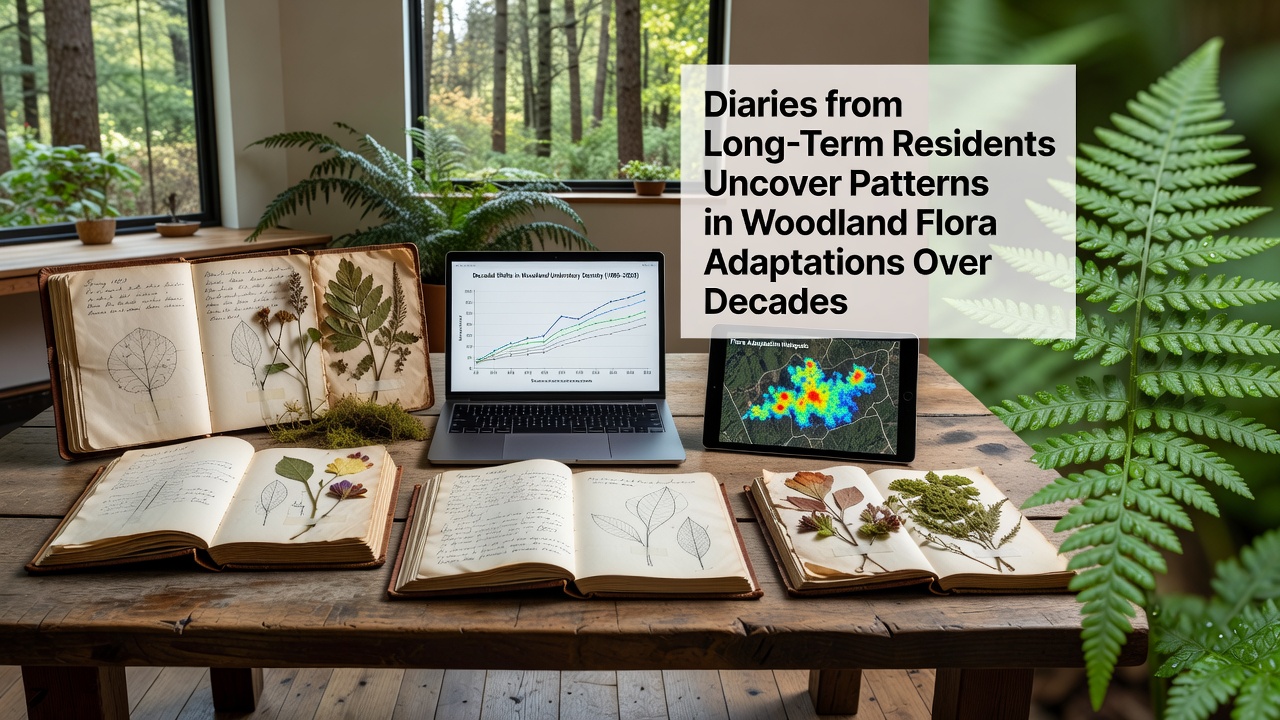
Scientists have begun integrating diary data with modern field measurements to test the accuracy of historical observations. A project initiated by the Australian National University compared resident notes on eucalyptus understory changes with contemporary soil and climate datasets, confirming that several species have altered their bark shedding schedules in response to altered fire intervals. Such validation efforts demonstrate that handwritten records can serve as reliable proxies for environmental monitoring where formal studies began only recently.
Patterns in species interactions also surface in these diaries. Residents frequently described changes in pollination timing, with certain insects appearing earlier relative to plant flowering, and this has prompted further investigation into synchrony disruptions. Data compiled from multiple diary collections show that areas with consistent canopy cover retained greater plant diversity despite regional temperature increases, whereas more open woodlands experienced faster turnover in dominant species.
Current Developments and Future Monitoring
In September 2026, several research institutions plan to release expanded databases that incorporate additional diary collections from previously underrepresented regions, allowing for wider geographic analysis of flora adaptation trends. These efforts build on existing collaborations between citizen scientists and professional ecologists who continue to digitize and categorize entries for statistical review. The combined records offer a resource that spans more than sixty years in some locations, providing context that shorter monitoring programs cannot supply on their own.
Conclusion
Diaries maintained by long-term woodland residents continue to supply detailed chronological information about flora adaptations that researchers integrate with broader environmental datasets. The patterns identified through these records, including shifts in flowering times, species distributions, and physiological traits, contribute measurable evidence to ongoing studies of woodland ecosystems. As additional collections undergo analysis and new data releases occur, these personal accounts remain a valuable component of long-term ecological documentation.